How to Maintain Vending Machine Properly
Imagine walking up to your vending machine, ready to restock, only to find it dark, jammed, and displaying an error code you’ve never seen before. You’ve just lost a day’s revenue. Worse, the customers who needed a quick snack or cold drink? They walked away frustrated, and maybe won’t come back.
Here’s the thing: most vending machine breakdowns are preventable. A consistent, well-planned maintenance routine is the difference between a machine that quietly earns money for 15+ years and one that constantly drains your wallet in repair bills. This 2026 guide to vending machine maintenance covers everything: daily habits, weekly deep-cleans, monthly system checks, seasonal prep, and the new smart-tech tools that make maintenance easier than ever. Whether you own one machine or manage a fleet of fifty, this guide will help you keep every unit running at peak performance.
Why Vending Machine Maintenance Actually Matters?
Before diving into the how-to, it helps to understand the real cost of skipping maintenance. A vending machine technician callout typically runs $75–$150 for the first hour, before any parts are needed. A compressor replacement? That’s $300–$600. A full refrigeration system failure on a cold drink machine can cost $800 or more, all for a problem that regular coil cleaning could have prevented for the price of a can of compressed air.
On the revenue side, a machine that’s down for just two days a month can lose $60–$200 in sales, depending on location traffic. Multiply that across a five-machine route, and you’re looking at $1,000+ in avoidable lost income annually.
The math is clear: a little maintenance now saves a lot of money later. Beyond dollars, there’s also the trust factor.
Customers who find a jammed or dirty machine twice won’t give it a third chance. In high-traffic locations like office buildings, gyms, and hospitals, machine reliability is directly tied to your contract renewals.
Understanding Your Vending Machine: Key Systems to Know
To maintain your machine effectively, you need to understand what can go wrong and why.
Most vending machines are made up of five core systems:
1. The Refrigeration System for cold drinks and food machines. This includes the compressor, condenser coils, evaporator, and fans. It’s the most expensive system to repair and the most sensitive to neglect.
2. The Product Delivery System, Motors, coil springs, conveyor belts, or elevator mechanisms that physically move products to the dispensing tray.
3. The Payment System, Coin mechanisms, bill validators, card readers, and (increasingly) contactless/NFC payment modules.
4. The Control Board and Software, the brain of the machine. Controls inventory tracking, error reporting, pricing, and, in modern machines, remote telemetry.
5. The Cabinet and Exterior: The glass, door seals, lighting, keypad, and overall structure.
Each of these systems has its own maintenance needs. When one is ignored, it stresses the others. A dirty condenser coil, for example, forces the compressor to work harder, leading to overheating, shortened lifespan, and eventually a costly failure.
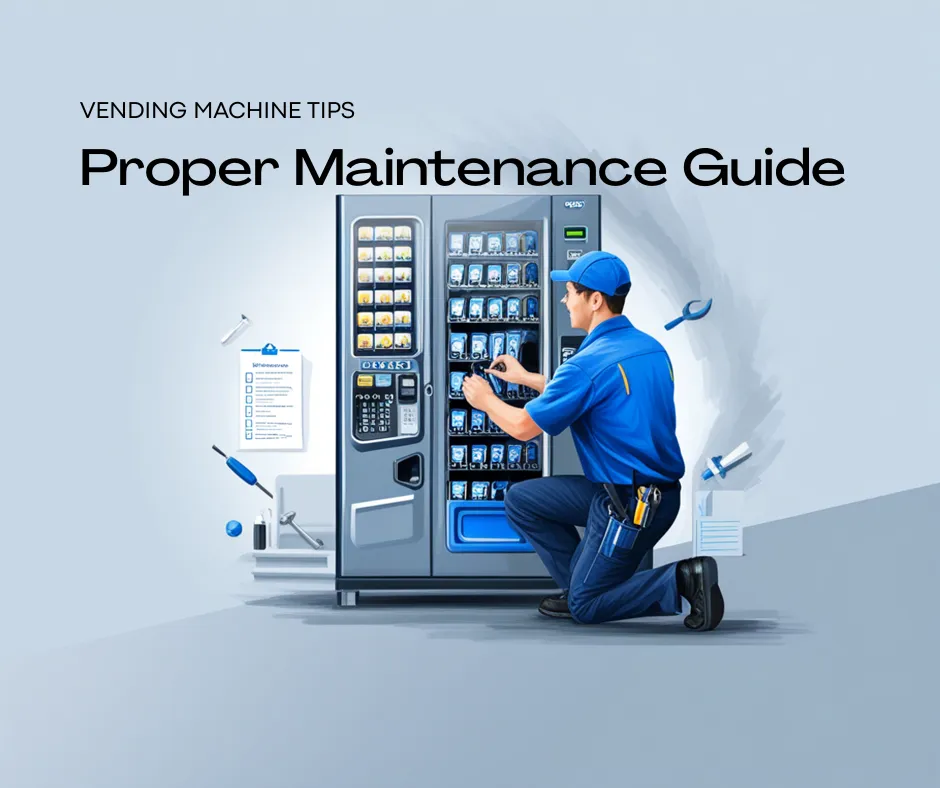
How to Maintain a Vending Machine Properly: Your Complete Schedule
Daily Maintenance (5–10 Minutes)
You don’t need much time each day, just a quick visual and functional check:
- Check product stock levels. Partially empty columns are fine, but empty columns mean lost sales. Restock before they hit zero.
- Check expiration dates. Especially critical for food and refrigerated items. A single expired product complaint can damage your reputation with a location manager.
- Wipe down high-touch surfaces. The keypad, coin slot, and product retrieval bin collect fingerprints, dust, and bacteria quickly. A quick wipe with a disinfectant cloth takes 60 seconds.
- Check the display screen. Error codes or blank screens should be noted and addressed promptly.
- Verify the machine is powered and cooling. A machine that's been unplugged (accidentally or deliberately) will spoil refrigerated products fast.
Pro tip: Create a simple daily check log, even a paper sheet on a clipboard, so you or your route drivers have a consistent routine. Consistency is where the real money is saved.
Weekly Maintenance (20–30 Minutes)
Once a week, give the machine a more thorough going-over:
Exterior cleaning:
Use a mild all-purpose cleaner and a microfiber cloth to wipe down the entire cabinet. Glass cleaner on the product window keeps it transparent and appealing. A dirty exterior sends a message to customers, even subconsciously.
Interior inspection:
Open the machine and look for any product that’s fallen, jammed, or shifted position. Check that coil springs are seated correctly and not bent. Look for signs of moisture, condensation, or mould, especially in refrigerated machines.
Inspect the condenser coils:
The condenser coils are typically found at the bottom front or rear of the machine behind a grille. Dust and debris accumulate quickly here, especially in environments with carpet, high foot traffic, or construction nearby. Use a soft brush or vacuum attachment to clear the buildup. Dirty coils are the #1 cause of refrigeration failures.
Test all payment methods:
Run a test transaction with coins, a bill, and a card if your machine accepts them. A payment system that rejects money is a machine that doesn’t sell, and customers won’t try a second time.
Check door seals and gaskets:
On refrigerated units, worn or cracked door seals let warm air in and force the compressor to run constantly. Run your hand along the door edge; you should feel no air leakage.
Monthly Maintenance (45–60 Minutes)
Monthly is when you go deeper. Block out an hour and work through each system methodically.
Full interior clean:
Remove all products and shelving if accessible. Use a mild detergent and warm water to clean the interior walls, shelves, and product chutes. Rinse thoroughly and let dry before reloading.
Deep condenser coil cleaning:
Beyond the surface dust, use a coil cleaning brush to get into the fins. For heavily soiled coils, a specialized coil cleaning spray (available at HVAC supply stores) dissolves grease and residue far better than air alone.
Test and clean the coin mechanism:
Coin mechanisms jam for a reason, usually residue buildup on the path or rollers. Use a lint-free cloth to clean the coin path. Many jam problems disappear with this simple step.
Bill validator maintenance:
The bill validator’s sensors get dirty over time and start rejecting valid bills. Most manufacturers sell a cleaning card (similar to ATM cleaning cards) that you simply run through the slot. Do this monthly.
Lubricate moving parts:
Motors, hinges, and sliding mechanisms benefit from a light application of food-safe lubricant. Avoid petroleum-based products inside machines that dispense food.
Software and firmware updates:
If your machine runs on a telemetry platform or has remote management software, check for available updates. Updated firmware often fixes bugs that cause error codes and improves payment system accuracy.
Review sales data:
Modern vending machines, and even many older ones retrofitted with telemetry boards, give you sales data by product slot. Use this monthly to identify slow-moving items (pulling them before expiration) and top sellers (making sure they’re always fully stocked).
Quarterly Maintenance (1.5–2 Hours)
Four times a year, schedule a deeper service session:
Inspect and test the compressor:
Listen for unusual sounds like rattling, grinding, or loud clicking. The compressor should hum steadily and quietly. If it cycles on and off too frequently, that’s a sign of refrigerant issues or coil problems.
Check refrigerant levels:
This requires a certified technician in most regions. If your machine isn’t cooling as well as it used to, even after coil cleaning, low refrigerant is a common culprit.
Inspect wiring and connections:
Look for any frayed wires, loose connectors, or signs of rodent damage (a real issue in some locations). Electrical problems are a safety hazard and can trigger error codes that are hard to trace.
Test the temperature:
Use a digital thermometer to verify that refrigerated machines are holding the correct temperature (typically 34–38°F for drinks, 36–41°F for food). Document the reading for your records.
Sanitize the interior with an approved sanitizer:
Beyond regular cleaning, a quarterly sanitization of the product delivery area and storage compartment helps prevent bacterial growth, particularly important in machines stocking fresh food or dairy.
Seasonal Maintenance: What Most Guides Skip
Most competitors don’t mention this, but the season matters.
Summer:
Heat is the enemy of refrigeration. During heat waves, check the condenser coil airflow more frequently. Make sure the machine has at least 4 inches of clearance from walls for ventilation. In outdoor or semi-outdoor locations, consider adding shade if possible.
Winter:
Cold temperatures can cause coin and bill mechanisms to slow down or malfunction, especially in unheated spaces like warehouses or parking garages. If temperatures drop below 50°F regularly, real-time sales by slot.
- Temperature alerts (machine sends a notification if temp rises above threshold)
- Door open/close events
- Error codes with descriptions
- Cash box levels
- Product stock levels (with DEX data)
This means you no longer have to drive to a location to discover a machine has been down for 12 hours. You get an alert the moment something goes wrong, and you can often diagnose the issue before you even leave the house.
Cashless payment systems have also changed maintenance needs. Card readers and contactless terminals require monthly software updates and occasional sensor cleaning, but they dramatically reduce coin jam issues that were once a major maintenance headache.
If your machines are still cash-only in 2026, upgrading to a cashless reader is both a revenue improvement and a maintenance simplification.
Troubleshooting Common Vending Machine Problems
Even with perfect maintenance, issues happen. Here’s how to handle the most common ones:
Problem: The machine won't accept bills
First, run a cleaning card through the bill validator. If that doesn’t work, check for visible obstructions or torn bill fragments inside the slot. Still failing? The validator’s sensors may need recalibration. Consult your machine’s manual or contact the manufacturer.
Problem: Product is stuck / not dispensing
Open the machine and inspect the affected column. Check if the motor is spinning (you can usually hear it try). A coil that’s bent or a product that’s jammed sideways is usually the issue. Straighten the coil and re-stack the product. If the motor doesn’t engage at all, it may need replacing, a job most operators can do themselves with a screwdriver.
Problem: The machine isn't cooling properly
Before calling a technician, check three things: (1) are the condenser coils clean? (2) Is there adequate airflow around the machine? (3) Is the door seal intact? If all three are fine and it’s still not cooling, you likely have a refrigerant or compressor issue that needs professional service.
Problem: The display shows error codes
Write down the code and check your machine’s manual first. Most error codes have simple fixes: a door that wasn’t fully closed, a coin that’s stuck in a sensor, or a temperature that briefly spiked. If the error persists after you’ve addressed the obvious cause, contact your machine’s manufacturer support line.
Problem: Coin mechanism keeps jamming
This is almost always a cleaning issue. Clean the coin path thoroughly and test with multiple coin types. If jams persist with clean coins after cleaning, the mechanism’s rollers or sensors may be worn and need replacement, a relatively inexpensive fix.
When to Call a Professional
DIY maintenance handles the vast majority of vending machine issues. But some things need a qualified technician: some machines need cold-weather kits or heating elements for their payment systems.
Post-Holidays:
Heavy-traffic periods like the holiday season leave machines more worn than usual. Schedule a full inspection in January to catch anything that slipped during your busy period.
2026 Update: Smart Technology and Remote Monitoring
This is what sets a 2026 maintenance guide apart from everything written in 2020 or 2021.
Remote telemetry systems have become standard on new machines and are available as retrofit kits for older units. Platforms like Cantaloupe (formerly USA Technologies), Vendron, and Nayax connect your machines to a dashboard you can access from your phone.
What can you monitor remotely?
- Temperature alRefrigerant leaks or recharging (legally requires a certified technician in most countries)erts (machine sends a notification if temp rises above threshold)
- Compressor replacement
- Control board failures or complex electrical issues
- Structural repairs to the cabinet or door locking mechanism
- Any issue where you're unsure, guessing with electrical systems can make things worse
Build a relationship with a local vending machine technician before you need one urgently. Having someone you trust who knows your machine models means faster response times and better prices than calling cold in an emergency.
Vending Machine Maintenance Checklist at a Glance
Daily
- Check and restock product; verify expiration dates
- Wipe high-touch surfaces
- Confirm the machine is powered and the displays are working
Weekly
- Clean exterior and glass
- Inspect the interior for fallen or jammed products
- Brush/vacuum condenser coils
- Test payment methods
- Check door seals
Monthly
- Deep clean interior
- Clean the coin mechanism and run the bill validator cleaning card
- Lubricate moving parts
- Check for software/firmware updates
- Review sales data and adjust product mix
Quarterly
- Inspect the compressor and listen for abnormal sounds
- Verify refrigerant performance (call a tech if needed)
- Check all wiring and connections
- Sanitize interior
- Verify temperature with thermometer
Seasonally
- Summer: Increase airflow checks, monitor temperature more frequently
- Winter: Check payment systems in cold environments
- Post-holidays: Full inspection after heavy-use periods
Frequently Asked Questions About Vending Machines
A vending machine should be serviced every 4 to 6 weeks. This helps keep it clean, in good working order, and fully stocked. Machines in busy places may need service more often, while low-use machines can be checked a little less often to keep performance and product quality good.
A vending machine usually lasts 10 to 20 years with proper care. Regular cleaning, part checks, and quick repairs help it run longer and stay reliable.
Safe cleaning products for inside a vending machine are mild dish soap with warm water, food-safe sanitizer, and alcohol wipes. They clean well without damaging parts or leaving harmful residue inside the machine.
You can do simple vending machine work yourself, like cleaning and filling products. But for machine or money system problems, you need a technician.
If your machine shows the same error again, turn it off and on, check for any blockage or loose parts, reset it, and if it still happens, call a repair person.
Final Thoughts
Maintaining a vending machine properly in 2026 isn’t complicated, but it does require consistency. The operators who earn the most from their machines aren’t the ones with the newest equipment. They’re the ones who show up on schedule, keep things clean, fix small problems before they grow, and use the available technology to stay informed. Use this guide as your baseline. Adapt the schedule to your machine type, your location environment, and your route frequency. And when in doubt, clean something; a clean machine almost always runs better than a neglected one.Your machines work hard for you every single day. A little regular attention is the least you can give back.