Snack vs. Drink Vending Machine: Which One Actually Fits Your Space?
If you’ve been going back and forth on a snack vs drink vending machine decision, you’re probably overthinking the part that doesn’t matter and underthinking the part that does. The category isn’t really the deciding factor; your space is. A drink machine in a quiet 20-person office can sit half-full for weeks. The same machine in a gym locker room sells out by Thursday. So before picking a side, it helps to understand what each machine actually does well, and where each one tends to fall flat.
This article walks through the real differences, not the surface-level, both are great for businesses version, but the parts that affect your bottom line: margins, restocking schedules, equipment cost, and the kind of foot traffic that makes one option clearly better than the other.
There isn’t a single winner. Snack machines generally cost less to run and need restocking less often, while drink machines tend to sell faster in active or hot environments but cost more to operate because of refrigeration. Most businesses that can fit the footprint end up choosing a combo machine instead of picking one category outright. But if your space genuinely only fits one machine, the right call comes down to three questions: how much your people move around during the day, what the climate is like, and whether drinks are already available somewhere nearby.
Why People Get This Decision Wrong
The most common mistake is treating this like a popularity contest. Drinks always sell more, so get a drink machine. That’s not really true, and it’s not how vending operators think about it. What actually predicts sales is unmet demand. If your office already has a fridge stocked with water and soda, a drink vending machine is competing with something free. It’ll underperform no matter how good the machine is. A snack machine in that same office, on the other hand, fills a gap nobody else is covering.
Flip the scenario to a warehouse with no break room amenities at all, and the math changes completely. There, a drink machine, especially in summer, often outsells snacks two or three to one, simply because there’s nowhere else to get water or a cold drink during a shift.
So the real question isn’t which machine is better. It’s “what’s already available in this space, and what’s actually missing.”
Snack Machines: Where They Win
A snack machine holds dry goods, such as chips, cookies, candy bars, protein bars, and crackers. The big advantage is shelf life. Most of that inventory lasts weeks, sometimes months, without spoiling. That means fewer restocking trips and almost no risk of throwing out expired product, which matters more than people expect once you’re managing a machine long-term instead of just installing one.
Snack machines tend to do well in:
- Offices that already have a break room fridge or coffee station covering drink demand
- Schools, where snack purchases usually outpace drink purchases, because water fountains exist
- Waiting rooms, lobbies, and other low-traffic spots where infrequent restocking isn’t just convenient, it’s necessary
A 30-person office with a stocked fridge is a good example. Put a snack machine there instead of a drink machine, and you’re not competing with anything free. You’re just filling the one gap that exists.
Drink Machines: Where They Win
A drink machine, bottled water, soda, energy drinks, and juice need refrigeration, and that one requirement changes everything about the cost structure. Refrigerated units cost more upfront, pull more electricity, and need more attention if something goes wrong with the cooling system. But in the right setting, the sales volume more than makes up for it.
Drink machines tend to do well in:
- Gyms and fitness centers, where people are sweating and need water or a recovery drink right after a workout
- Warehouses and manufacturing floors without climate-controlled break rooms
- Anywhere in a hot climate, or anywhere that sees a real summer spike in demand
Here’s a pattern worth knowing if you’re planning around seasons: a warehouse without AC will often see drink sales spike hard from May through September, then drop back down closer to snack-level volume once it cools off. If you’re the one restocking, that’s a schedule shift worth planning for, not something to discover halfway through July.
Comparing the Two Side by Side
Snack Machine | Drink Machine | |
Profit margin per item | Usually higher | Usually slightly lower |
Sales speed (turnover) | Slower in most settings | Faster in active/hot environments |
Shelf life | Weeks to months | Days to weeks (refrigerated); longer for shelf-stable bottles |
Restocking frequency | Lower | Higher, especially seasonally |
Equipment cost | Lower (no refrigeration) | Higher (refrigeration required) |
Best environments | Offices, schools, lobbies | Gyms, warehouses, hot climates |
Weather sensitivity | Low | High |
So Which One Actually Makes More Money?
This is where most comparisons get vague, so let’s be specific. Snack machines usually carry a better margin on each item; the stock cost of a bag of chips is low relative to what it sells for. But margin per item isn’t the same as total revenue. If the machine only sells 15 items a day because it’s in a quiet hallway, that higher margin doesn’t add up to much.
Drink machines often have a thinner margin per can or bottle, partly because the product costs more and partly because refrigeration adds an ongoing expense. But in a gym or warehouse, a drink machine might sell 60 to 80 items a day instead of 15. That volume can easily outpace the snack machine’s better margin.
The honest takeaway: location decides this more than category does. A drink machine in the wrong spot will underperform a snack machine in the right spot, and vice versa. If someone tells you one category is just more profitable without asking about your space first, that’s a sign they haven’t actually thought it through.
What About Combo Machines?
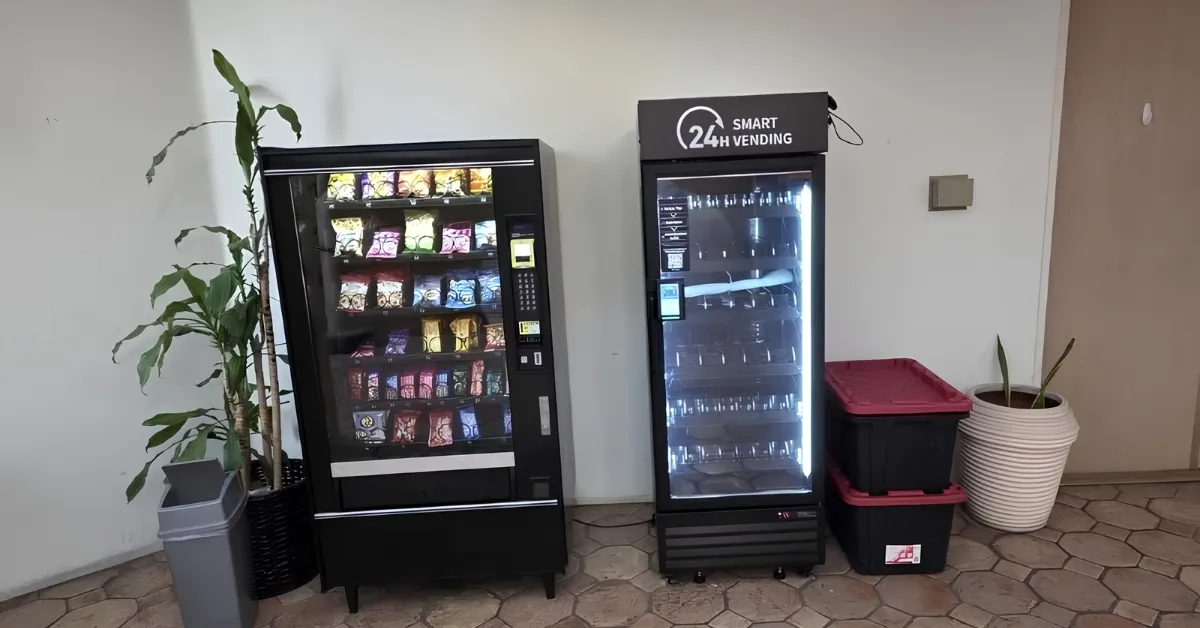
A combo machine stocks both snacks and drinks in one unit, typically a refrigerated section for beverages and a dry-goods section for snacks. Most businesses that can fit the footprint end up here instead of picking one category, because it covers both kinds of demand without needing two separate machines and two restocking visits.
The trade-off is capacity. A combo machine usually holds less of each category than a dedicated single-category machine of the same size. That’s rarely a problem in moderate-traffic settings, but in a high-activity environment like a gym, where drinks might outsell snacks five to one, a combo machine can run out of beverages well before the snack side needs attention, which means your restocking schedule has to account for the imbalance instead of treating both sides equally.
- Check what’s already available. A break room fridge covers some drink demand already, which points toward snacks or a combo.
- Think about activity level. Gyms, warehouses, and physically demanding environments lean toward drinks.
- Account for climate. Hot regions or strong summer seasons should expect beverage demand to spike, budget restocking around that, not a flat average.
- Estimate real foot traffic. Fewer than 30 people regularly passing the machine usually favors a single-category unit; more than that can typically support a combo without inventory sitting too long.
- Look at your space and power setup. Tight budgets or limited electrical capacity often point toward a snack-only machine as the lower-cost entry point.
Common Questions About Snack vs. Drink Vending Machine
It depends on the location more than the category. Snack machines usually have a better margin per item; drink machines often make up for a thinner margin with faster turnover in gyms, warehouses, and hot climates.
A combo machine holds both snacks and drinks in one footprint, usually with a refrigerated section. Two separate machines hold more of each category individually but take up more space and need two restocking visits instead of one.
A combo machine is usually the safest choice for offices since it covers snacking and hydration in one unit. If the office already has a stocked fridge, a snack-only machine can work just as well.
A drink-heavy combo or a dedicated drink machine usually performs best in gyms, since people need water or a recovery drink right after working out, and that demand is steady throughout the day.
Yes, generally. Refrigeration adds both equipment cost and ongoing electricity use. In active or high-traffic locations, that extra cost is usually offset by higher sales volume.
Drink machines typically need more frequent restocking, especially in summer or in high-activity locations. Snack machines, with their longer shelf life, can usually go longer between visits.
The Bottom Line
There’s no universal right answer between a snack and drink vending machine; it depends on what your space already has, how active the environment is, and what the climate does to demand throughout the year. Offices with a fridge already in place tend to do better with snacks. Gyms and warehouses tend to do better with drinks. And anyone with the space for it usually ends up with a combo machine instead of picking a side. The question worth asking isn’t snack or drink, it’s what does this specific space actually need, and that’s worth figuring out with real foot-traffic numbers, not a guess.