Best Vending Machine Locations in 2026
Many people place vending machines in the wrong locations, making very little money. Sometimes the sales are not even enough to cover the cost of snacks and drinks.
But the right location can make a big difference. A machine in a busy place can drive daily sales with little effort.
The best vending machine locations usually have lots of people and very few nearby food options. That is why location is one of the most important parts of a successful vending machine business.
If you want to start a vending business or grow your current route, it is important to choose the right place for your machines. In this guide, you will learn how to find the best vending machine locations, what to check before placing a machine, and how to avoid common mistakes.
What Makes a Vending Machine Location Good?
Before jumping into specific spots, it helps to understand what separates a great location from a bad one.
Three core factors drive vending machine sales:
1. Foot traffic.
The more people who walk past your machine daily, the more sales you make. A simple rule: aim for locations with at least 50 people passing through each day. High-traffic spots like office buildings, hospitals, and schools can hit hundreds or even thousands per day.
2. Captive audience
A captive audience means people who cannot easily leave to buy food or drinks elsewhere. Think about a factory worker on a 15-minute break; they are not driving to a convenience store. Your machine is their only option. These situations drive consistent, repeat purchases.
3. Product-to-audience match:
A healthy snack machine in a gym makes perfect sense. A candy machine in a pediatric clinic waiting room? Less so. Match what you sell to who is there. Wrong product-location pairings result in poor sales, no matter how much foot traffic exists.
Keep these three factors in mind as you evaluate every location.
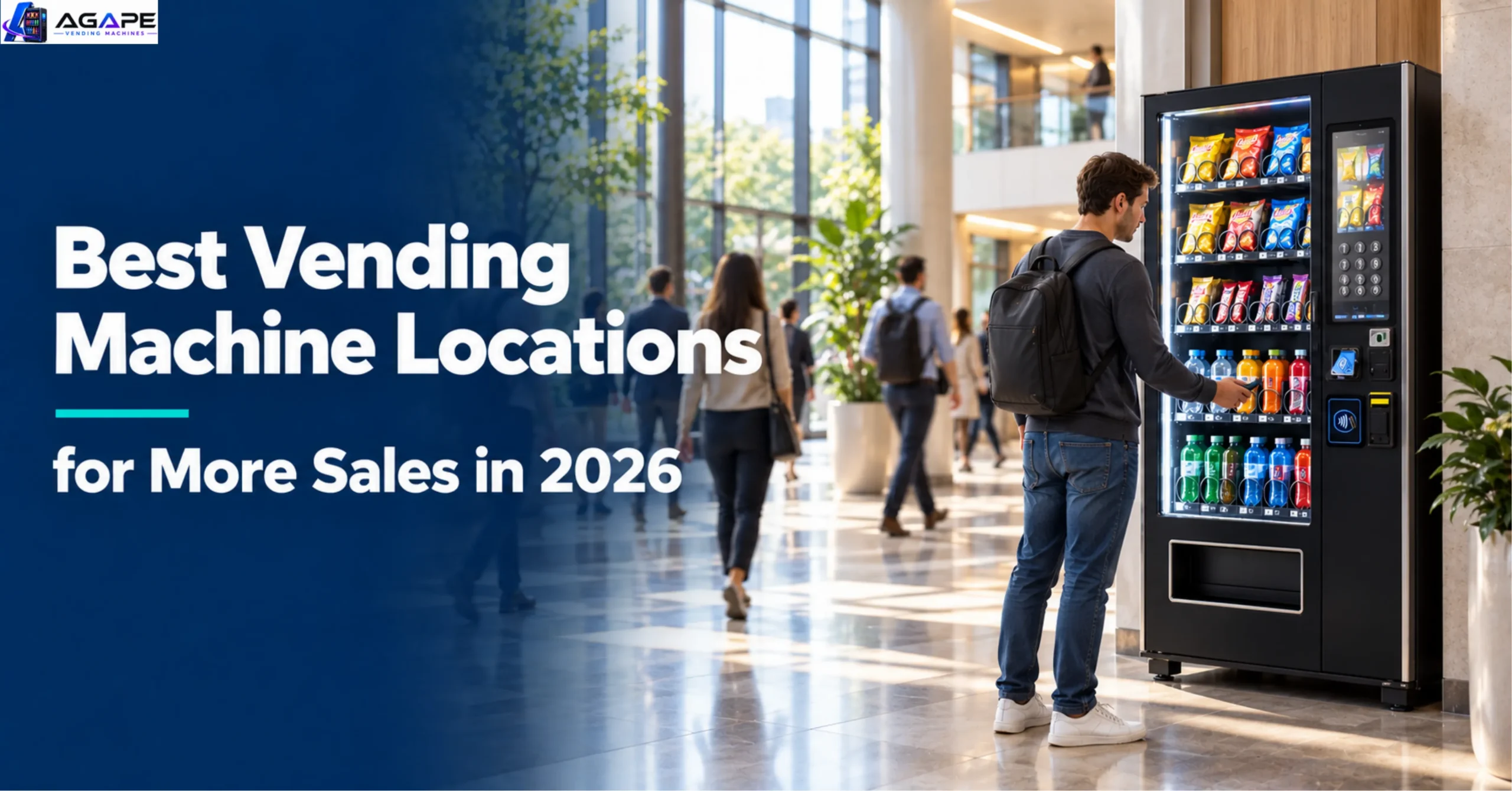
The Best Vending Machine Locations in 2026
1. Office Buildings and Corporate Offices
Office buildings are among the most reliable spots for vending machines. Employees work long hours and need snacks and drinks without leaving the building. A mid-size office with 50 to 100 employees can generate strong, consistent daily revenue.
What works here:
Snack, coffee, and cold drink machines perform very well. Healthy options are increasingly popular in corporate settings as companies focus on employee wellness.
Pro tip:
Target offices with late shifts or 24-hour operations. These locations produce sales around the clock, not just from 9 to 5.
2. Hospitals and Medical Facilities
Hospitals never close. Visitors, patients, nurses, and doctors need food and drinks at all hours, including 2 AM when most restaurants are shut. This makes hospitals one of the most profitable vending machine locations you can find.
What works here:
A mix of healthy snacks, traditional comfort foods, bottled water, and energy drinks. Consider a separate coffee machine near the waiting areas.
What to know:
Hospital vending agreements can be competitive. You may need to meet specific nutritional guidelines depending on the facility. However, once you are in, you often stay for years.
3. Manufacturing Plants and Factories
Factory workers have set break times and limited options. They cannot leave the plant during a 10 or 15-minute break. This is a textbook captive audience scenario.
Large plants with hundreds of employees can support multiple machines running simultaneously, snacks, drinks, and even hot food machines. Revenue potential here is very high.
What works here:
Hearty snacks, energy drinks, coffee, and sandwiches or hot meals if you use combo or food machines.
Pro tip:
Ask about shift schedules before placing machines. A factory running three shifts means 24-hour sales potential.
4. Schools, Colleges, and Universities
Students are constant snackers with money to spend. University campuses in particular are excellent because students are on campus all day and often into the evening for studying or events.
What works here:
Chips, granola bars, candy, water, juice, and energy drinks. Check local regulations first; many school districts have nutrition rules that limit what you can sell in K-12 schools.
College campuses are more flexible and can support a wide range of products, including speciality beverages and healthier grab-and-go options.
5. Hotels and Motels
Guests arrive hungry at midnight. They forget toiletries. They want a cold drink after a long day of travel. Hotels are a perfect environment for vending machines because guests have immediate, convenient needs and limited alternatives after hours.
What works here:
Snacks, beverages, toiletry machines (toothpaste, razors, pain relievers), and healthy food options. Boutique and mid-range hotels often prefer operators who offer a clean, well-stocked machine that reflects their brand.
6. Gyms and Fitness Centres
Gym-goers are a highly motivated buying audience. They just finished a workout and want protein, hydration, or a healthy snack immediately. This creates very strong impulse purchase behaviour.
What works here:
Protein bars, electrolyte drinks, water, healthy snacks, and pre-workout products. Traditional candy and soda machines are a poor fit here; know your audience.
Revenue tip:
Gyms that are open 24/7 give you round-the-clock earning potential on top of the already strong purchase motivation.
7. Laundromats
This one surprises many new operators, but laundromats are hidden gems in the vending world. Customers sit and wait for 45 minutes to an hour with nothing to do. A snack or drink machine is a welcome distraction.
What works here:
Chips, candy, water, soda, and single-serve laundry supplies if you add a speciality machine.
Why it works:
Low competition, long dwell times, and customers who have nothing else to do make for very reliable impulse purchases.
8. Transportation Hubs (Airports, Bus Stations, Train Stations)
People in transit are almost always hungry or thirsty, and they are often willing to pay premium prices because they have no better option nearby. Airports especially support high-margin vending.
What works here:
Water, snacks, phone chargers, travel-size items, and speciality food machines. Airports may require you to work through an approved vendor program, but commuter stations and bus terminals are often more accessible for independent operators.
9. Apartment Complexes
Large residential complexes, especially those with 100 or more units, are an underrated vending location. Residents who want a late-night snack or a drink after the building store closes will turn to a vending machine in the lobby or common area.
What works here:
Beverages, snacks, and household essentials. Consider a small sundry machine with items like aspirin, batteries, or phone chargers.
Pro tip:
Target complexes with amenity spaces like gyms, pools, or lounges. These shared areas create natural foot traffic beyond just residents passing through.
10. Government Buildings and Military Bases
Government offices and military bases can be great places for vending machines. Many employees work long hours, and there are often very few nearby places to buy snacks or drinks.
These locations are usually stable and can keep your vending machines busy for a long time. In many cases, there is also less competition compared to private businesses.Military bases are especially good because many people stay on-site all day, including nights and weekends. This creates steady demand for food, drinks, and quick snacks.
11. Car Dealerships and Auto Repair Shops
Customers waiting for a car service sit in waiting rooms for one, two, or even three hours. That is a captive audience with time to kill and money in their pockets.
What works here: Coffee machines, snacks, bottled drinks. These locations are small in volume but very easy to manage, and the waiting room dynamic creates predictable purchase behaviour.
12. Recreational Facilities and Sports Complexes
Sports arenas, recreation centres, and community pools see families, athletes, and spectators all day long, especially on weekends. Parents with kids want quick snacks. Athletes want hydration.
What works here: Sports drinks, water, healthy snacks, and traditional snack items. Event-driven traffic means big sales spikes on game days or weekends.
How to Evaluate Any Location Before You Commit
Knowing the best location types is useful, but every individual spot is different. Here is how to evaluate a specific location before you sign anything.
Visit multiple times. Check foot traffic in the morning, afternoon, and evening. A spot that looks busy at noon may be empty by 3 PM.
Count the people. Aim for at least 50 people passing the machine area daily. The higher, the better.
Check existing alternatives. Is there a café, cafeteria, or convenience store within easy walking distance? If yes, your machine faces real competition. Locations with no alternatives are far more valuable.
Talk to the property manager. Ask how long other vendors have stayed, whether the space has had machines before, and what the commission terms look like.
Negotiate fair commission rates. Standard commission is around 10 to 25 per cent of sales to the property owner. Avoid agreements above 25 per cent unless volume is exceptionally high.
Mistakes to Avoid When Choosing a Location
Even experienced operators make these errors. Avoid them from the start.
- Choosing a location by gut feeling alone. Always verify foot traffic data before committing.
- Ignoring the competition. A nearby cafeteria or café will pull sales from your machine.
- Underestimating maintenance logistics. A high-earning location that takes 90 minutes to restock each time may not be as profitable as it looks.
- Not reading the agreement carefully. Some placement contracts include exclusivity clauses, early termination fees, or price controls on what you can charge.
- Skipping the 60-day review. After placing a machine, check sales data at 30 and 60 days. If it is underperforming, move it. Don’t wait a year hoping things improve.
Frequently Asked Questions
The best vending machine locations are places with high foot traffic. Offices, schools, hospitals, gyms, and apartment buildings are good choices. People in these places often want quick snacks and drinks. Locations with few nearby stores can help vending machines make more sales each day.
Industry operators generally recommend a minimum of 50 people per day walking past the machine. Locations with 200 or more daily visitors can support multiple machines profitably.
Yes. You need written permission from the property owner or manager. Most operators sign a placement agreement that outlines commission rates, maintenance responsibilities, and contract length.
Start by making a list of businesses and facilities in your area that fit the high-traffic, captive audience model. Cold outreach, networking, and referrals from existing location owners are the most common methods. There are also location-finding services, though their quality varies.
Yes. Large apartment complexes with shared amenity spaces are good candidates. Contact the property management company and propose a revenue-sharing agreement.
Yes, you need permission before placing a vending machine. Most business owners or property managers will ask for a simple agreement. The agreement usually explains where the machine will be located, who will fill it, and how payments or commissions will be handled.
Final Thoughts
Finding the best vending machine locations is very important. A good location can help you get more sales every day. Before you install a vending machine, consider how many people visit the area. Also, check if there are nearby stores or food shops. Places with more people usually bring better results.The best vending machine locations are offices, schools, hospitals, gyms, and apartment buildings. People in these places often want quick snacks and cold drinks. To grow your vending machine business, choose the right location, keep your machine full, and offer products people like to buy.