The Future of Automated Retail: What's Changing and Why It Matters in 2026
Think about the last time you grabbed a snack from a vending machine. Did you pay with cash? Probably not.
Today’s retail world is moving fast, and the future of automated retail is no longer a distant concept. It’s already playing out in airports, hospitals, office buildings, college campuses, and street corners across California and beyond.
From AI-powered smart vending machines to cashierless stores and intelligent micro markets, automated commerce is reshaping how people shop, how businesses operate, and how products reach consumers, all without a cashier in sight.
This guide breaks down everything you need to know: what automated retail actually means, what’s driving its rapid growth, where the technology is heading, and what it means for businesses considering this model in 2026.
What Is Automated Retail? (Simple Definition)
Automated retail is the use of technology, including Artificial Intelligence (AI), robotics, computer vision, and IoT devices, to sell products or services with little to no human involvement.
It covers a wide range of formats:
- Traditional and smart vending machines
- Self-service kiosks
- Micro markets (open-format unattended retail areas)
- Cashierless stores (like Amazon Go)
- Automated lockers and pick-up stations
- Robotic retail carts and pop-up shops
The common thread across all of these is automation replacing or reducing human labor while delivering a faster, smoother, and often more personalized experience for the customer.
Why Is Automated Retail Growing So Fast Right Now?
This isn’t just a tech trend. There are real, practical forces pushing businesses toward automated retail at an accelerating pace.
Rising Labor Costs
In California, the minimum wage has steadily climbed, and staffing retail locations around the clock is no longer economically viable for many operators. Automated retail solves this directly; a smart vending machine or micro market operates 24/7 with zero hourly wages.
Shifting Consumer Behavior
Today’s shoppers, especially Gen Z and Millennials, want speed, convenience, and control. They’d rather tap their phone and grab a product than wait in a checkout line. Consumer behavior is driving demand for self-service retail options.
Post-Pandemic Hygiene Preferences
The push for touchless purchasing and contactless shopping didn’t disappear after the pandemic. It became a permanent expectation. Automated retail naturally delivers on both.
Technology Becoming More Affordable
A few years ago, AI-powered retail systems were only accessible to large corporations. Today, machine learning tools, IoT sensors, and cloud computing platforms have become significantly cheaper, making smart vending technology accessible to small and mid-size operators.
The Core Technologies Powering Automated Retail in 2026
Understanding the future requires understanding what’s under the hood. These are the technologies making modern automated retail possible.
Artificial Intelligence (AI) and Machine Learning
AI is the brain of the operation. Machine learning algorithms analyze sales patterns, predict demand, adjust pricing, and recommend products, all in real time.
For example, an AI-powered vending machine at a university in San Jose can learn that energy drinks sell 3x more during finals week and automatically prioritize stocking them. That’s not guesswork, that’s data-driven retail at scale.
Computer Vision
Computer vision allows machines to see their environment. In automated retail, this means:
- Detecting which products customers pick up or put back
- Monitoring shelf inventory without manual checks
- Enabling age verification for restricted products (alcohol, tobacco)
- Powering cashierless walk-in store experiences
Internet of Things (IoT)
IoT sensors embedded in smart vending machines and micro markets connect every unit to a central cloud dashboard. Operators in Los Angeles can monitor a machine in Sacramento, seeing real-time stock levels, temperature alerts, payment system status, and sales data, without leaving their office.
Predictive Analytics
Retail analytics platforms process historical and real-time data to forecast what will sell, where, and when. This eliminates overstocking and stockouts, two of the biggest profit killers in unattended retail.
Cloud Computing and Remote Monitoring
Cloud-based management platforms let operators control entire fleets of machines remotely. Software updates, price changes, product swaps, all done digitally. No service truck needed for routine adjustments.
Mobile Payments and Digital Wallets
Cashless payment systems have become the standard, not the exception. Modern automated retail units accept Apple Pay, Google Pay, tap credit/debit cards, QR code payments, and app-based loyalty rewards, making the transaction frictionless for the customer.
Automated Retail Formats: Which One Is Right for Your Business?
Not all automated retail is the same. Here’s a clear breakdown of the main formats and what they’re best suited for.
Format | Best For | AI Integration | Avg. Footprint | Key Benefit |
Smart Vending Machine | High foot traffic, single product categories | High | Small (2–4 sq ft) | 24/7 unattended sales, low overhead |
Micro Market | Office buildings, campuses, break rooms | High | Medium (50–200 sq ft) | Open shelving, higher product variety |
Self-Service Kiosk | Fast food, ticketing, info centers | Medium | Small–Medium | Reduced wait times, upsell automation |
Cashierless Store | Urban retail, convenience stores | Very High | Large (500+ sq ft) | Full store experience, no checkout |
Automated Locker | E-commerce pickup, pharmacies | Low–Medium | Small | Secure, flexible pickup |
Smart Vending Machines
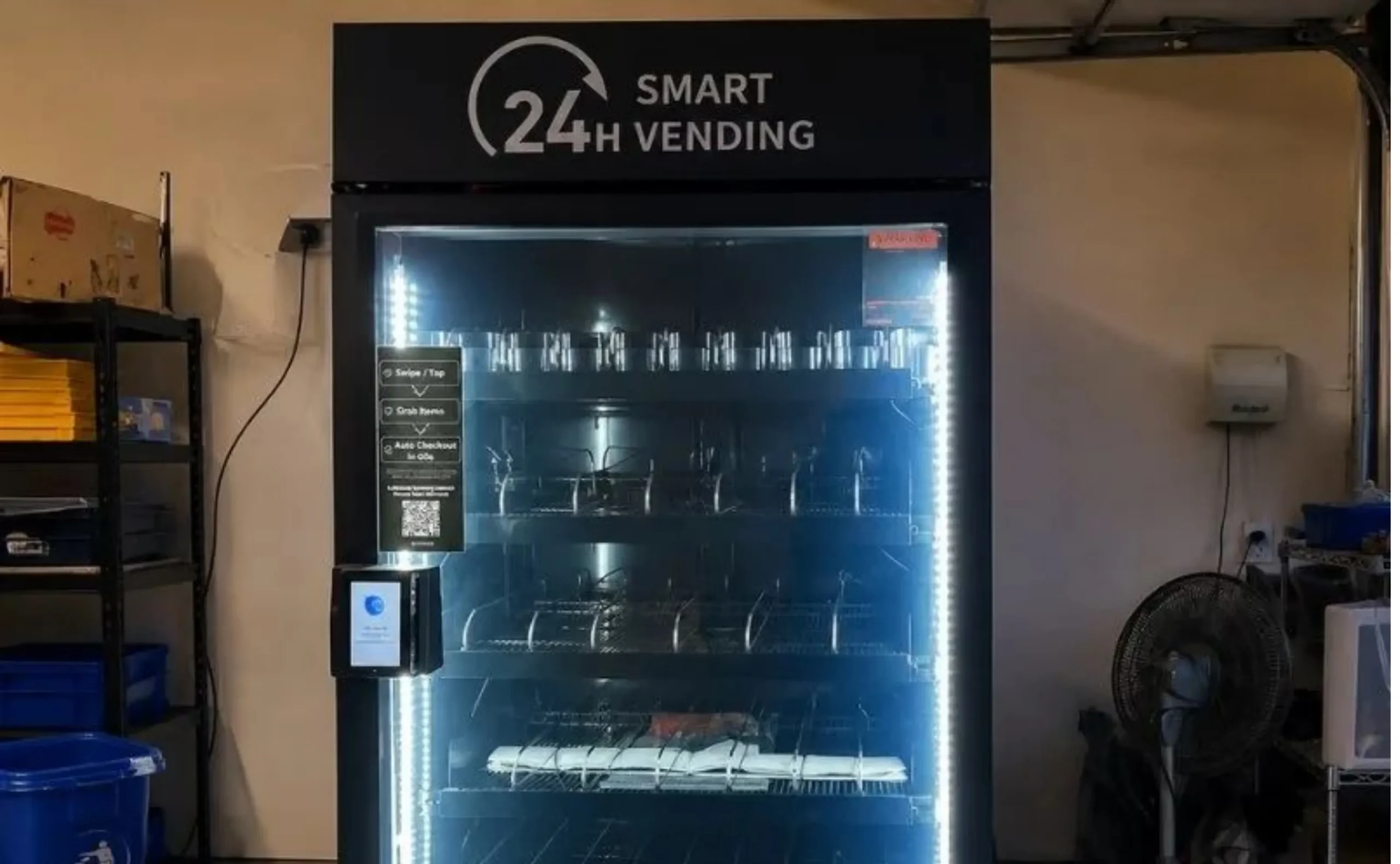
The most established form of automated retail. Today’s smart vending machines go far beyond snacks and soda. In California alone, you’ll find vending machines dispensing electronics, beauty products, prescription pick-ups, cannabis (in licensed locations), and fresh meals.With AI and IoT built in, these machines track every sale, flag low inventory automatically, and accept every major payment method.
Micro Markets
Micro markets are open-plan, unattended retail zones — typically set up inside an office building, hospital, or campus facility. Think of it like a small convenience store with no staff. Customers browse open shelves, grab what they want, and check out at a self-service kiosk using their phone or card.
Micro markets consistently generate higher average transaction values than vending machines because customers can browse freely and purchase multiple items at once.
Self-Service Kiosks
Self-service kiosks are used heavily in foodservice, healthcare, and transportation. McDonald’s, airports, and hospital check-in desks use them to reduce wait times and free up staff for higher-value tasks.
Retail analytics from kiosk interactions provide businesses with rich consumer behavior data they simply couldn’t capture before.
Automated Retail in California: A Market Built for This
California is one of the most advanced markets for automated retail in the United States, and for good reason.
The state combines high labor costs, a tech-forward consumer base, dense urban markets, and a business culture that embraces innovation. These factors make California ideal for deploying smart vending technology and unattended retail solutions.
Key verticals seeing strong automated retail growth in California include:
- Tech campuses (San Francisco Bay Area, Silicon Valley) employee micro markets, smart snack and meal vending
- Healthcare facilities (Los Angeles, San Diego), PPE dispensing, medication pick-up, 24/7 facility supply access
- Universities (UC system, Cal State) cashless campus vending, healthy snack programs, sustainability-focused inventory
- Transportation hubs, LAX, SFO, and major transit stations are deploying smart kiosks and travel retail vending
Cannabis dispensaries use automated compliance-driven dispensing machines in licensed locations
California’s progressive regulations around digital payments, data privacy (CCPA), and contactless commerce have also helped shape automated retail infrastructure across the state.
The ROI of Automated Retail: What the Numbers Look Like
One of the most common questions from business owners is: Does automated retail actually pay off?
The answer depends on the format, location, and product mix, but here’s a realistic picture.
Smart Vending Machine ROI Example
Setup: A single AI-powered vending machine placed in a mid-sized corporate office building in San Diego.
- Average daily transactions: 40–60
- Average transaction value: $3.50–$5.00
- Monthly revenue: $4,200–$9,000
- Monthly operating cost (product + service): $2,500–$4,500
- Monthly profit range: $1,700–$4,500
Compare that to a staffed retail kiosk at the same location, factoring in wages, benefits, and scheduling, and the cost savings become obvious quickly.
Micro Market ROI Example
Micro markets in office environments with 200+ employees typically generate:
- Monthly revenue: $8,000–$20,000
- Lower shrinkage rates than expected (typically under 3% with camera monitoring)
- Payback period: 12–18 months on equipment investment
What Are the Challenges of Automated Retail?
Being honest here matters. Automated retail isn’t perfect, and operators should go in with clear expectations.
Upfront Technology Investment
Smart vending machines and micro market setups cost more than traditional machines. Depending on features, a fully equipped AI vending unit can range from $3,000 to $15,000+. The investment pays back over time, but it requires upfront capital or financing.
Product and Location Fit
Not every product works in every location. High-value items need stronger security features. Perishable goods require refrigeration and tighter inventory management. Location selection is critical; a machine in the wrong spot simply won’t perform.
Technical Maintenance
Even with predictive maintenance and remote monitoring, machines can still malfunction. Having a reliable service partner in your region matters, especially for operators managing multiple units.
Data Privacy and Compliance
AI systems that collect consumer behavior data must comply with California’s CCPA regulations. Businesses need to understand what data their systems collect, how it’s stored, and how to handle customer data requests appropriately.
Trends Shaping the Future of Automated Retail in 2026 and Beyond
Hyper-Personalization at Scale
Machine learning will enable automated retail systems to deliver genuinely personalized recommendations, not just “popular items” suggestions, but location-aware, time-aware, and behavior-informed product displays via digital signage.
Voice-Activated Retail
Natural language processing is making voice ordering in automated retail a near-term reality. Customers will speak to a machine, confirm their selection, and complete a transaction, fully hands-free.
Sustainability-Driven Inventory
AI tools will optimize product sourcing based on sustainability data, prioritizing local products, reducing food waste through demand forecasting, and tracking carbon footprint across the supply chain.
Robotics Integration
Robotic restocking systems are in development that can refill vending machines autonomously. Combined with drone delivery in urban environments, the entire supply chain from warehouse to machine could eventually run without human intervention.
Autonomous Walk-In Micro Stores
The cashierless store format, pioneered by Amazon Go, will become more accessible and affordable through shared technology platforms. Smaller operators will be able to deploy container-based autonomous stores in high-footprint locations without building traditional retail infrastructure.
Key Takeaways
- Automated retail is growing rapidly, driven by labor costs, consumer behavior shifts, and more affordable AI technology
- Smart vending machines, micro markets, self-service kiosks, and cashierless stores are the main formats, each with different use cases and ROI profiles
- AI, computer vision, IoT, and predictive analytics are the core technologies making modern automated retail possible
- California is one of the strongest markets for automated retail in the US due to high labor costs, tech-savvy consumers, and dense urban demand
- Real profitability is achievable, but location selection, product fit, and operator support are critical success factors
- 2026 trends point toward voice activation, robotics, hyper-personalization, and sustainability-focused inventory
Frequently Asked Questions (FAQ)
Automated retail is the use of technology, including AI, IoT sensors, computer vision, and robotics, to sell products with minimal or no human involvement. Examples include smart vending machines, micro markets, self-service kiosks, and cashierless stores.
A vending machine is an enclosed unit that dispenses individual products. A micro market is an open, staff-free retail area where customers browse shelves, select multiple items, and self-check out at a kiosk. Micro markets generally offer more product variety and higher average purchase values.
Yes, for well-placed units with the right product mix. A single smart vending machine in a high-traffic California office or campus can generate $1,700–$4,500 in monthly profit after operating costs. Micro markets in 200+ employee facilities can generate $8,000–$20,000 per month in revenue.
Modern automated retail units accept credit/debit cards (tap-to-pay), Apple Pay, Google Pay, QR code payments, app-based wallets, and in some cases, cryptocurrency. Cash-only machines are increasingly rare and not recommended for new deployments.
California is one of the best markets in the US for automated retail. High minimum wages reduce the cost advantage of staffed retail, while the state's tech-forward consumer base readily adopts cashless, contactless shopping experiences. High-density urban areas in Los Angeles, the Bay Area, and San Diego offer strong foot traffic opportunities.
Costs vary widely by format. A basic smart vending machine starts around $3,000–$5,000. AI-powered units with full analytics and cashless payment systems range from $7,000–$15,000+. Micro market setups typically run $10,000–$30,000+, depending on size and equipment. Many operators use financing or lease options to manage upfront costs.
Conclusion
Automated retail isn’t replacing the human shopping experience; it’s evolving it.
The businesses that succeed in this space are the ones that combine the right technology with the right locations, the right products, and a genuine understanding of what their customers want. Whether you’re looking at a single smart vending machine or planning a full micro market rollout across multiple California sites, the fundamentals remain the same: smart placement, data-driven decisions, and a reliable operator partner.
The future of retail is automated. The question isn’t whether to get involved, it’s when and how.