Vending Machines for Gyms: The Complete Guide to Choosing, Stocking, and Profiting
I’ve walked into more gym back offices than I can count over the years, and there’s a pattern I keep seeing. A vending machine sits in the corner, half-lit, stocked with the same candy bars you’d find at a gas station, and it’s losing money, or close to it.
Then I walk into another gym ten miles away, and the machine by the front desk is quietly pulling in a couple thousand dollars a month with almost no effort from staff. Same category of equipment. Completely different result.
The difference almost never comes down to the machine itself. It comes down to whether the owner actually thought about who’s buying from it, what they need in that exact moment, and where the box is sitting.
This guide walks through everything I’ve learned helping gyms get this right, including a look at how vending is actually being done in California, where the market is more competitive and the customer is a lot more particular about what’s in the box.
Who's Actually Buying From a Gym Vending Machine
Think about the last time you walked out of a hard session. You’re not craving a bag of chips. You’re thirsty, maybe a little depleted, and if you forgot your shaker bottle that morning, you’re annoyed about it. That’s the exact window a gym vending machine is built to catch.
Members hit the gym three, four, sometimes five times a week. That’s a lot of repeat opportunities to sell something small and useful, a cold electrolyte drink, a protein bar, a pair of lifting straps someone forgot at home. None of it is a huge purchase on its own, but multiply it by a few hundred members and steady foot traffic, and it adds up to real, mostly passive income for the gym.
What to Actually Stock
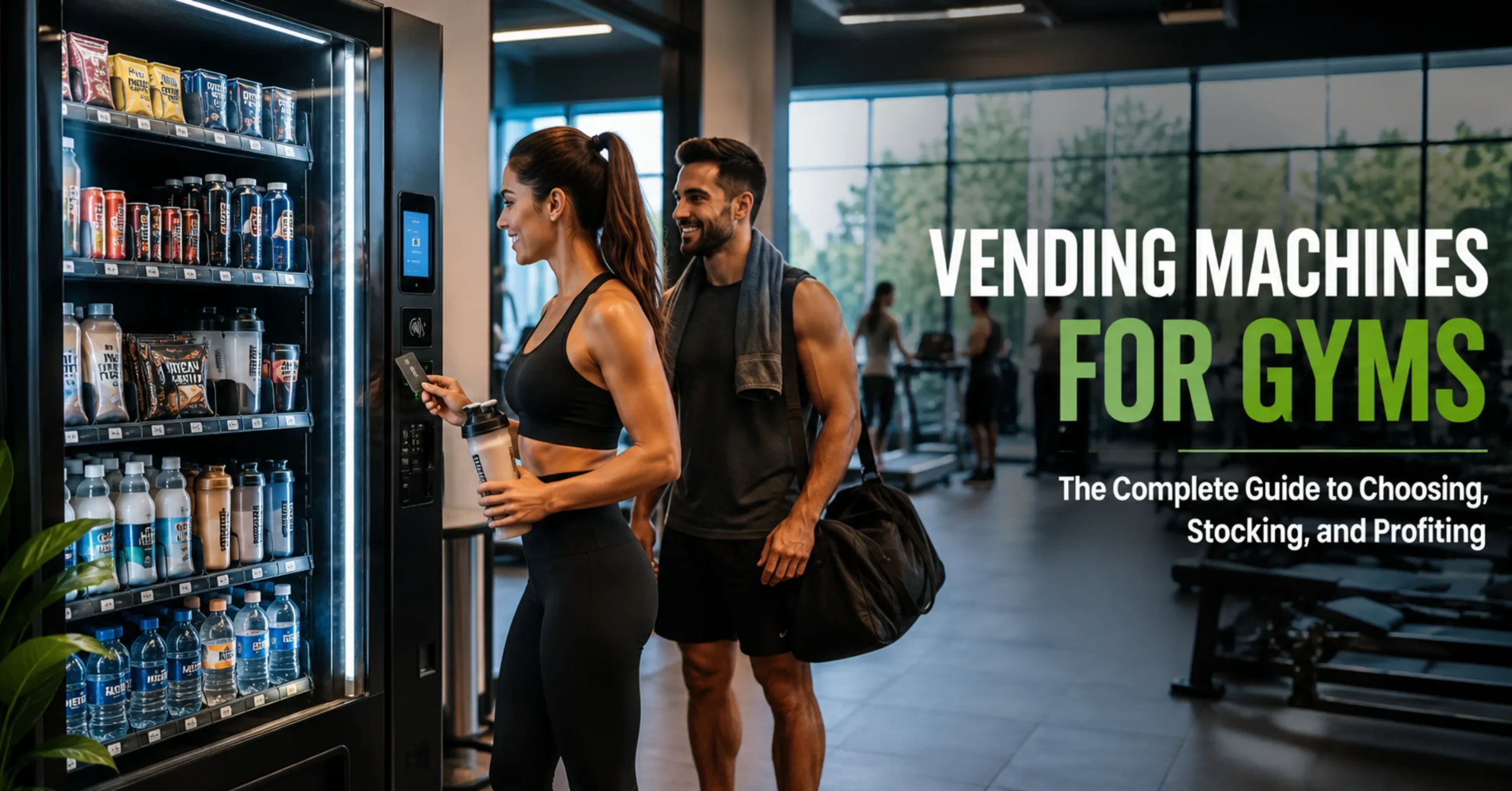
This is where a lot of gyms get it wrong. They treat a fitness vending machine like a regular snack machine and load it with soda and candy, which tends to look out of place next to a squat rack and can even work against the gym’s own messaging if it’s pushing nutrition coaching or a healthy lifestyle brand.
A better approach is to think in terms of before, during, and after a workout:
- Before training: caffeine, energy drinks, single-serve pre-workout packets
- During or right after: water, electrolyte drinks, sports drinks
- Post-workout recovery: protein bars, protein shakes, creatine, ready-to-drink shakes
- Gear people forget: lifting gloves, wrist wraps, headbands, small towels, earbuds
Protein bars, bottled water, and energy drinks tend to be the top-moving items across most gym locations, and in some evening-heavy facilities, energy drinks alone can account for a huge chunk of total vending revenue. But this varies a lot by the type of gym, a CrossFit box or a warehouse-style strength gym leans heavily on cold beverages, while a boutique studio might sell more low-sugar snacks and recovery drinks.
I’ve walked into more gym back offices than I can count over the years, and there’s a pattern I keep seeing. A vending machine sits in the corner, half-lit, stocked with the same candy bars you’d find at a gas station, and it’s losing money, or close to it.
Then I walk into another gym ten miles away, and the machine by the front desk is quietly pulling in a couple thousand dollars a month with almost no effort from staff. Same category of equipment. Completely different result.
The difference almost never comes down to the machine itself. It comes down to whether the owner actually thought about who’s buying from it, what they need in that exact moment, and where the box is sitting.
This guide walks through everything I’ve learned helping gyms get this right, including a look at how vending is actually being done in California, where the market is more competitive and the customer is a lot more particular about what’s in the box.
Choosing the Right Type of Machine
There isn’t one best gym vending machine, it depends on your space and your traffic.
Combo machines (snacks and drinks in one unit) are the go-to for smaller studios that don’t have room for two separate machines. You get variety without eating up floor space.
Standalone beverage machines make more sense in high-cardio environments, think spin studios, CrossFit boxes, or training centers where members are constantly reaching for something cold.
Glass-front machines tend to outsell the old spiral-coil style simply because members can see what’s inside at a glance, which drives more impulse buys.
Smart coolers and micro markets are becoming more common in bigger, higher-end facilities. They let members grab items off an open shelf and pay via an app or tap-to-pay, which feels less like a vending machine and more like a mini convenience store. These cost more up front but tend to move higher-margin items like fresh meals or premium RTD shakes.
If you’re not sure which fits, look at your busiest hour. A gym that’s dead until 5pm and packed until close needs a different setup than one with steady traffic all day.
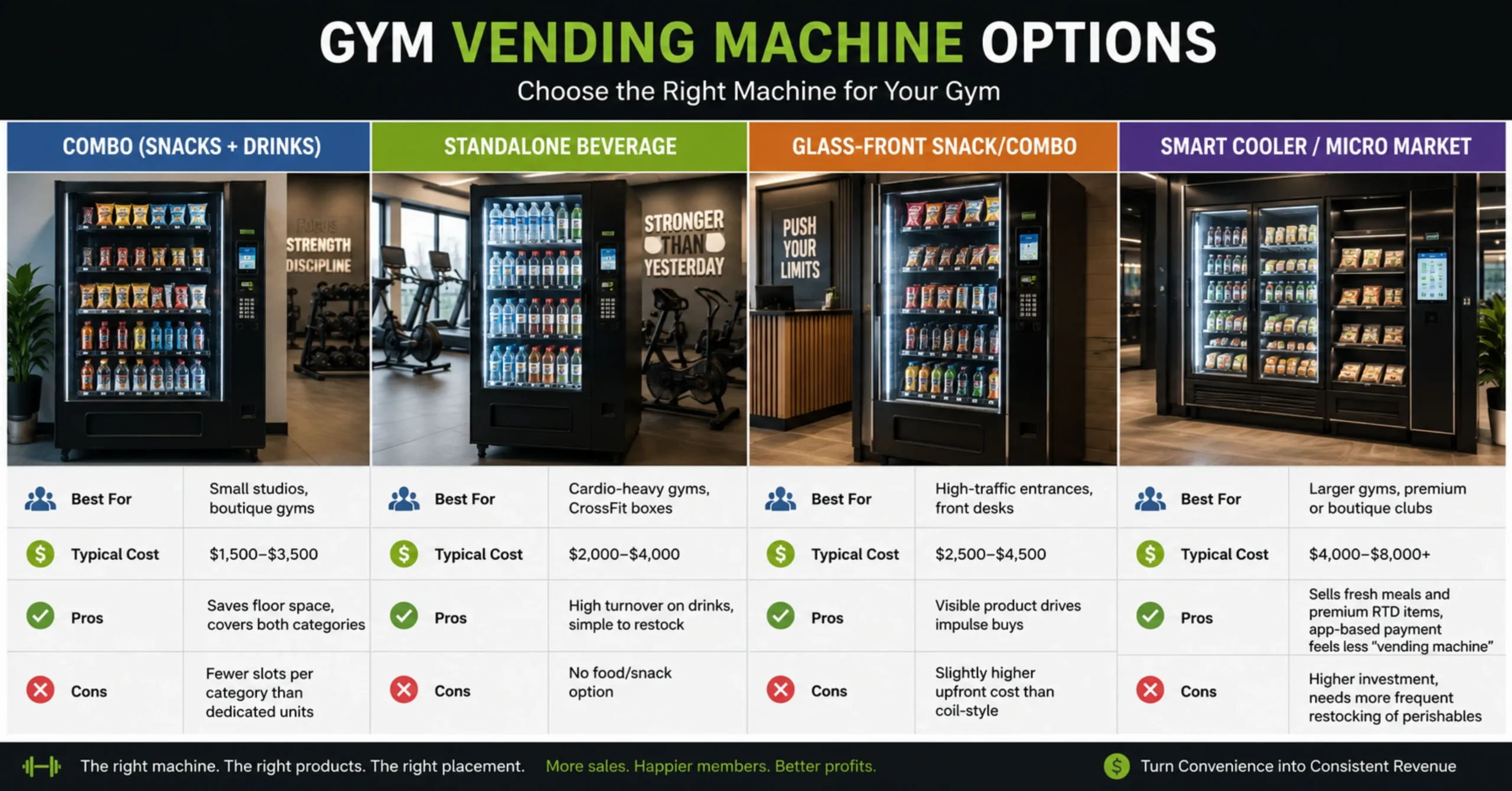
Here’s how the main options stack up side by side:
Machine Type | Best For | Typical Cost | Pros | Cons |
Combo (snacks + drinks) | Small studios, boutique gyms | $1,500–$3,500 | Saves floor space, covers both categories | Fewer slots per category than dedicated units |
Standalone beverage | Cardio-heavy gyms, CrossFit boxes | $2,000–$4,000 | High turnover on drinks, simple to restock | No food/snack option |
Glass-front snack/combo | High-traffic entrances, front desks | $2,500–$4,500 | Visible product drives impulse buys | Slightly higher upfront cost than coil-style |
Smart cooler / micro market | Larger gyms, premium or boutique clubs | $4,000–$8,000+ | Sells fresh meals and premium RTD items, app-based payment feels less “vending machine” | Higher investment, needs more frequent restocking of perishables |
None of these are set in stone on price, new vs. used, and buy vs. revenue-share, will move these numbers quite a bit, which is covered in the cost section below.
What It Actually Costs
Pricing varies a lot depending on whether you buy new, buy used, or partner with a vending company.
A used machine can sometimes be found for around $1,500, while a new unit with smart features, cashless payment, remote inventory tracking, often runs closer to $5,000 depending on size and capability. If you’d rather not put capital into equipment, most vending companies will install a machine for free in exchange for a cut of the revenue, sometimes in the range of 10 to 25 percent of gross sales, though this is almost always negotiable, especially if you have decent foot traffic to offer them.
Buying outright means you keep all the revenue once the machine is paid off, but you’re also on the hook for restocking, repairs, and keeping inventory fresh. Partnering with a vending company takes that burden off your plate, but you’ll have less say over pricing and product mix unless you push for it in the contract.
Margins on snacks and beverages typically land somewhere between 43 and 64 percent, which is a solid margin for something that requires almost no ongoing labor once it’s set up.
Where to Put It
This part gets overlooked constantly. A gym owner will drop a few thousand dollars on a machine and then tuck it behind the locker room door where nobody sees it.
High-traffic, high-visibility spots work best, near the entrance, by the front desk, or right along the path members take on their way out. That last one matters more than people think, since a huge share of sales happen post-workout when someone’s already thinking about hydration or recovery. One gym I came across installed a unit near the exit of a boxing facility and stocked it with sports drinks, bars, and towels, it did close to $900 in its first month, with most of that coming after 6pm when people were leaving evening classes.
Researching the California Market
California is a useful market to study because it’s both dense with gyms and unusually particular about what goes in the box. I looked at how vending companies across Los Angeles, San Diego, and the greater Bay Area are actually approaching gym accounts, and a few patterns stood out.
Los Angeles and Orange County have no shortage of vending providers competing for gym contracts, companies like Loyal Vending and Intellivend Services both call out gyms specifically as a market they serve, and both lean hard into healthy and organic product lines rather than standard snack mixes. That’s not a coincidence. LA’s fitness culture is health-conscious enough that a machine full of candy bars would actively look out of place, and providers there know it. Intellivend even runs what it calls a fit pick program aimed specifically at gyms and schools, stocking items free of trans fat and gluten.
San Diego has a strong base of long-running, locally owned operators, companies that have been serving the county for decades rather than newer national chains. That matters for gym owners because a locally rooted vendor tends to respond faster when a machine jams or a card reader goes down, which is a common complaint with vending in general.
Statewide operators like Vending Group have built out dedicated service pages for individual California metros, Los Angeles, San Diego, Sacramento, the Bay Area, each tailored to the specific business landscape of that city. It’s a sign that vending machines for gyms isn’t treated as one generic offer in California; providers are clearly segmenting by region and by what that region’s gym-goer actually wants.
The bigger takeaway for a California gym owner: don’t just take whatever standard machine and product mix a provider offers by default. Ask specifically about their healthy or organic line, and don’t be shy about negotiating the revenue split, with this many providers competing for the same gyms across LA, San Diego, and the Bay Area, you have more leverage than you might think.
The Honest Downsides
Not every vending machine turns into free money. I’ve heard from gym owners where retail sales actually dropped once products got locked behind glass, something about the vending format made members less likely to grab things on impulse compared to an open retail shelf. Machines also need someone paying attention to them. An empty slot or a broken card reader sitting unfixed for two weeks doesn’t just lose that week’s sales, it trains members to stop checking the machine altogether.
If you’re going to do this, treat it like a small piece of your retail strategy, not a set it and forget it appliance.
Frequently Asked Questions
Used machines can run around $1,500, while new smart machines with cashless payment and remote monitoring are typically closer to $5,000. Many vending companies will also install one for free in exchange for a share of the revenue.
Water, electrolyte and sports drinks, protein bars, energy drinks, single-serve pre-workout products, and small forgotten essentials like gloves or towels tend to perform best.
It varies widely by traffic and placement, but figures in the $900 to $2,000 or more per month range are not unusual for a well-placed machine in a moderately busy gym.
A combo machine is usually the most practical choice for smaller spaces since it covers both snacks and drinks without needing two separate units.
Most modern units do, supporting tap-to-pay, Apple Pay, Google Pay, and standard card readers alongside cash.