How to Get a Vending Machine for My Business: The No-Nonsense US Guide
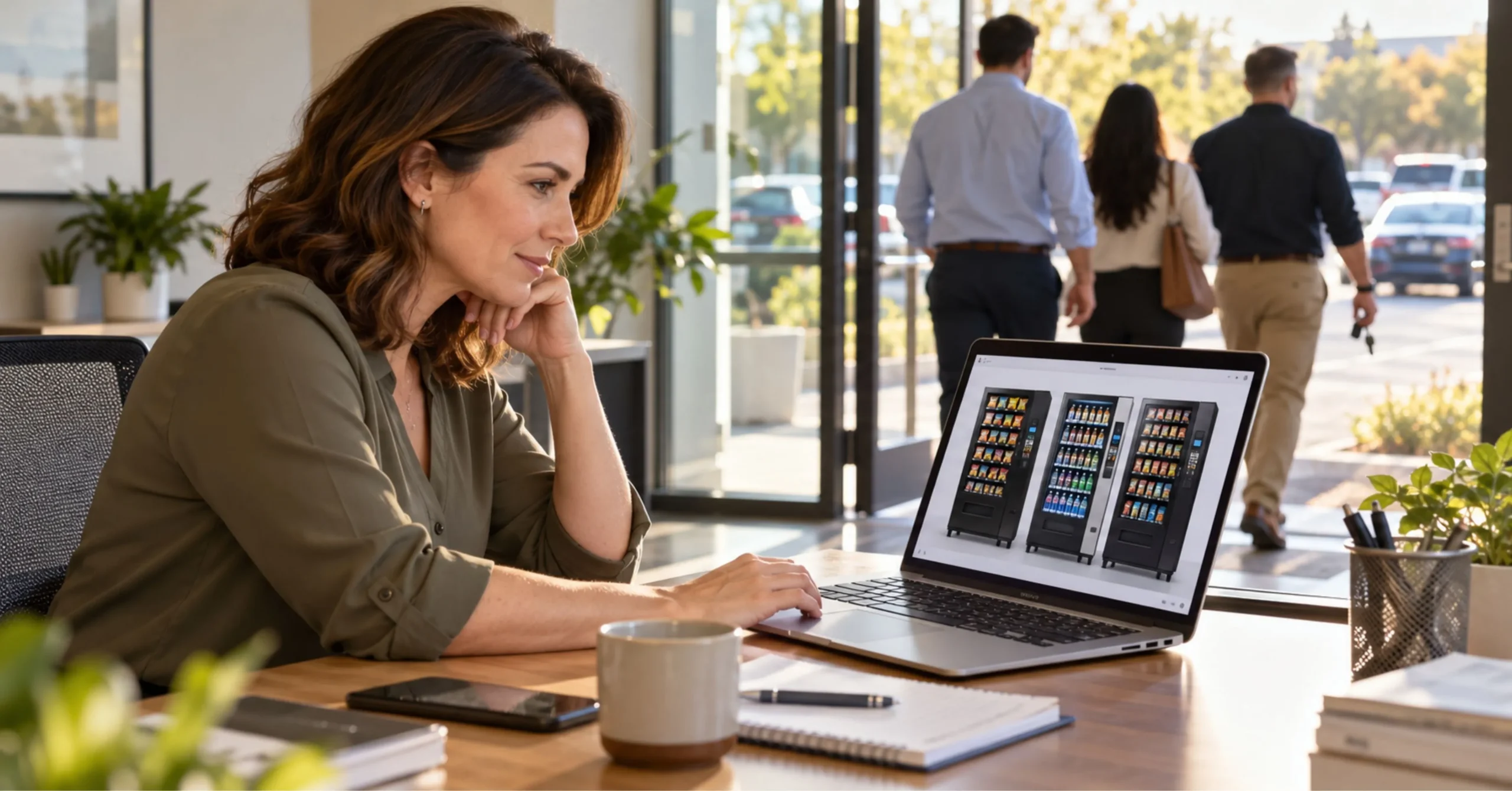
Picture an office manager named Dana. She’s made up, but you probably know her. Dana runs operations for a 60-person company, and every afternoon around 2:45 she watches a small parade of coworkers drift toward the parking lot, car keys in hand, on a mission for chips and an energy drink. Twenty minutes later they trickle back, a little sugar-happy and a lot less focused.
So Dana does what most of us would do. She opens her laptop and types how to get a vending machine for my business. What she finds is a mess. One site promises a free machine with zero strings. Another talks about spending thousands of dollars. A third wants to explain “micro markets.” Nobody tells her what actually happens between the first phone call and the first bag of pretzels.
This guide fills that gap. We’re Agape Vending Machines, a Palm Desert-based supplier of smart snack, drink, coffee, and combo machines for offices, gyms, schools, and apartment communities. We handle installation and restocking, so we’ve sat on the other side of these conversations many times. We wrote this for owners and managers anywhere in the US, whether you run a Phoenix warehouse, a Tampa gym, or a Columbus office park. By the end, you’ll know your options, what operators look for, what to ask, what to sign, and what to skip.
Two Ways to Get a Vending Machine
The short answer is that you have two routes. You can invite a vending operator to place, stock, and maintain a machine on your property, or you can buy a machine and run it yourself. The first costs less money and less time. The second gives you control and puts all the work and risk on your shoulders.
Route One: A Full-Service Vending Operator
With full-service placement, the operator owns the machine. They choose or agree on the products, handle payments, restock, clean, and fix problems. You provide space, power, and access. Many operators install without a purchase fee when a site has enough regular users, though no purchase fee is not the same as no terms. We’ll get to that.
This route suits an office, warehouse, apartment community, or school that wants the amenity without a new job description. Nobody on your team should become the person who also does the vending machine.
Route Two: Buying and Running It Yourself
Owning means you pick the machine, set the prices, buy the inventory, and keep the revenue. It also means you handle restocking, expired products, refunds, and the 7 a.m. text saying the machine ate someone’s dollar. Retailers who already sell packaged goods, or businesses that want custom branding, tend to enjoy ownership more than people who just want snacks in the break room.
The Middle Road: Buy It, Outsource the Work
Some owners buy the machine and hire a third party to stock and service it. That can work, but put the responsibilities in writing. Who covers spoiled stock? Who pays for a repair visit? Who answers when a customer is out two dollars? A snack distributor is not automatically a repair technician.
Will an Operator Actually Place a Machine at Your Business?
Maybe. Operators run route businesses. Every stop costs fuel and a driver’s time, so they want locations where people buy often enough to justify the visit. There’s no federal rule and no universal headcount that guarantees a yes. A site with 30 steady users can beat one with 300 people who rarely walk past the machine.
What Operators Look At
- Regular users, not total headcount. Three shifts of 25 people who stay on site are a better audience than 200 remote employees who visit quarterly.
- Foot traffic and hours. A lobby that goes quiet at 5 p.m. performs differently from a hospital waiting area that never closes.
- Nearby alternatives. A gas station across the street is competition. A 20-minute drive to the nearest food is a captive audience.
- Space and power. They need a spot with a suitable outlet and a delivery path wide enough for the cabinet.
- Service access. They need to get in with a hand truck on a predictable schedule.
Reading the “Free Machine” Promise Carefully
Free placement is real, but it’s a business arrangement, not a gift. The operator earns money from the sales. In return, they may ask for exclusivity at your location, a minimum term, or the right to remove the machine if sales drop. That can be perfectly fair. It’s just something to read before you sign instead of after.
Questions Worth Asking Every Operator
- Who owns the machine, and who can move it?
- Who pays for electricity and card-processing fees?
- How often will you restock, and what happens when the best seller runs out?
- Who handles refunds when a purchase fails?
- What is the contract term, and how do we end it?
- Can we request products and see sales reports?
- Do you carry liability insurance, and can you send proof?
Red Flags
- No written agreement before installation
- Big commission promises with no explanation of how they’re calculated
- No local service contact, only a general inbox
- Pressure to sign “today only” for a machine that’s going to sit there for years
A Quick Note on Commissions
Some operators share a slice of sales with the host, and many don’t. If it matters to you, ask whether it’s based on gross sales or sales after refunds, and how often you’ll see a report. Then get the answer in writing.
How to Get a Vending Machine for My Business: The Step-by-Step Plan
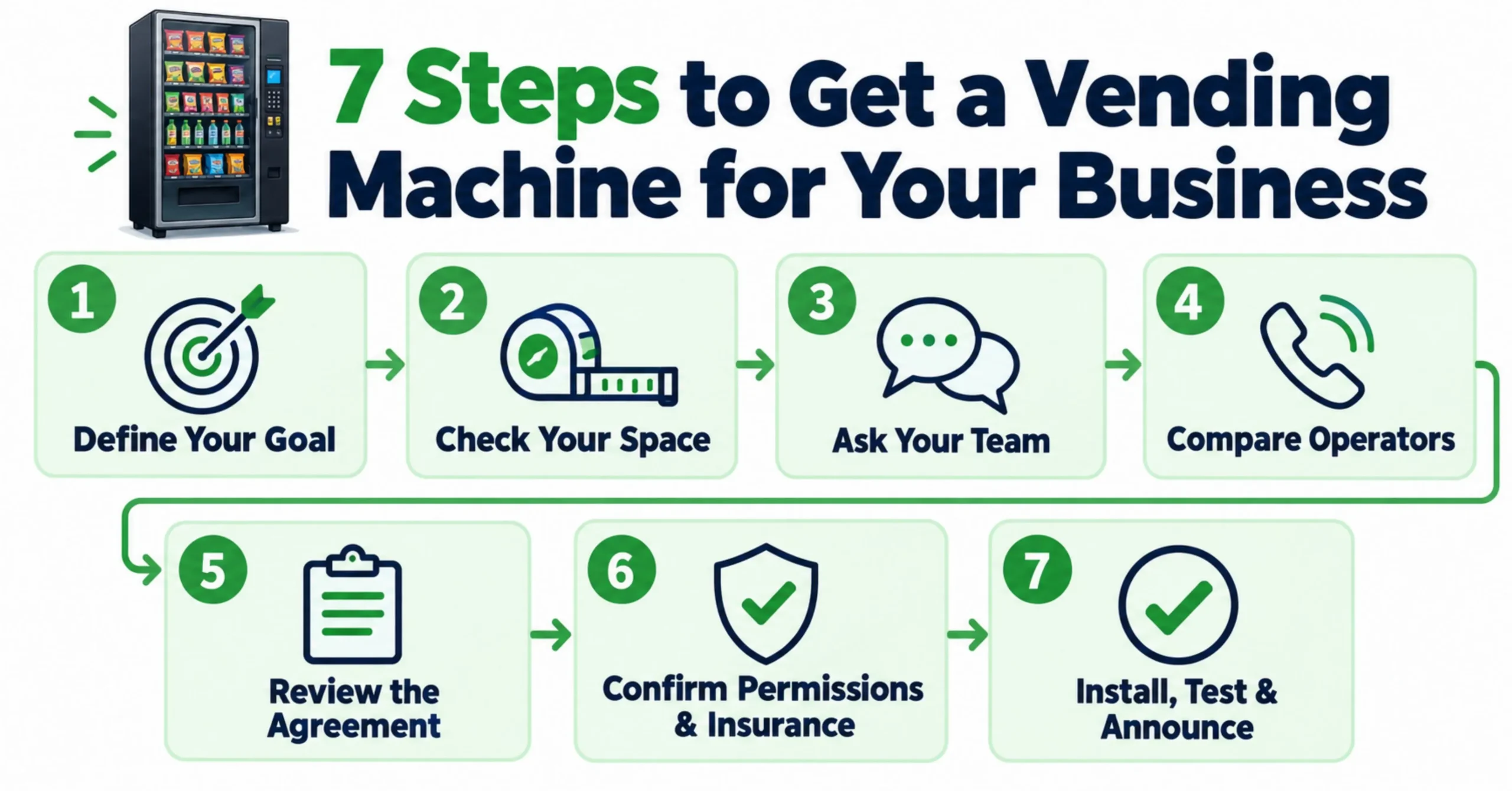
Here’s the sequence we recommend, whichever route you choose.
Step 1: Decide What the Machine Is For
A break-room machine meant to keep people from leaving at 3 p.m. is a different project from a lobby machine meant to earn money. Finish this sentence: We want this machine to. Your answer will determine the location, products, and contract terms.
Step 2: Do a Ten-Minute Site Survey
Walk the proposed spot. Count how many people pass it in a day, find the nearest outlet, measure doorways and hallways, and take a few photos. Check whether the machine will be reachable when people want it, including night shifts and weekends. Operators love a prepared host because it speeds up every answer.
Step 3: Ask Your People
A quick poll beats guessing. Offer staff, members, or residents three snack options and three drink options. Add an “I wouldn’t buy from a machine” choice, because that answer is useful too.
Step 4: Contact Two or Three Operators
Send each one the same details: number of regular users, hours, available space, photos, and your goal. Compare them on service, contract terms, and payment options, not on who replied first. If you’d like to start a conversation with us, you can reach Agape Vending Machines through our website.
Step 5: Review the Agreement
Read the term length, exclusivity, removal terms, service response times, and who pays for damage. If something sounds vague, ask for it in plain language. A good operator won’t mind.
Step 6: Confirm Permissions and Insurance
Check your lease, HOA rules, or building policy. Ask your insurance agent whether the machine and its contents change anything about your coverage, and ask the operator for proof of their own insurance.
ys for damage. If something sounds vague, ask for it in plain language. A good operator won’t mind.
Step 7: Install, Test, and Tell People
On install day, buy something yourself. Go through the whole experience from selection to pickup, and try every payment method. Then announce it with an email, a sign, or a mention at the Monday meeting. A machine nobody knows about sells to approximately nobody.
Picking the Right Machine and Products
Machine Types at a Glance
Machine type | Best for | Watch for |
Snack machine | Offices, warehouses, schools | Package size versus spiral channels |
Cold drink machine | Gyms, factories, warm-weather sites | Power draw, cooling reliability |
Combo (snack and drink) | Small to mid-size sites with one open spot | Capacity versus floor space |
Coffee machine | Offices, early-shift sites | Cleaning schedule, supplies |
Smart, cashless machine | Almost anywhere | Data signal at the exact spot |
Why Cashless Payment Matters
Hardly anyone carries a pocket full of dollar bills anymore. A machine that only takes cash is asking people to bring something they stopped bringing years ago. Make sure the reader accepts cards and mobile wallets, and test it where the machine will actually stand. A weak signal in a back corner will kill a card reader faster than any unhappy customer. Ask who pays the processing fees, how refunds work, and what happens during a network outage.
Choosing Products People Will Buy Twice
Start small. A vending machine is not a miniature grocery store. Build around the reason people are standing there: water and protein bars at a gym, quick snacks and coffee at an early-shift warehouse, grab-and-go options in a school staff lounge. Pick a few reliable favorites, add a few healthier choices, and let the sales report tell you what to swap. A $5 specialty snack that sells twice a month takes a slot that three $2 items could fill every day.
What Does It Cost, and Who Makes Money?
If an operator places the machine, you typically pay no purchase price, but you may cover electricity and accept limits on products or pricing. If you buy, expect to pay a few thousand dollars for a new machine, with larger, refrigerated, or touchscreen models costing more. Prices change with brand, options, and freight, so treat any number you read online, including ours, as a starting point for quotes.
An owner’s budget usually includes:
- The machine and payment reader
- Freight and installation
- Opening inventory
- Card-processing fees and software or connectivity charges
- Insurance and electricity
- Restocking time, spoilage, and repairs
A Hypothetical Example (Not a Promise)
Say a machine sells 15 items a day for 26 days a month at an average of $2.50. That’s $975 in sales. If products cost an average of $1.20 each, you’ve spent $468 on stock, leaving $507. Card fees at roughly 3% take about $29, leaving about $478. Subtract $30 for electricity and $20 for spoiled or damaged items, and you’re at roughly $428, before repairs and before paying anyone for the hours spent restocking.
Those numbers are invented for illustration, and yours will be different. The lesson is real, though: revenue isn’t profit, and your time is a cost even when nobody sends you an invoice for it. That’s the quiet reason many busy owners prefer an operator.
Contracts, Compliance, and Permits
This section is general information, not legal advice. Rules in the US vary by state, county, and city, so confirm the details locally.
Accessibility
A machine shouldn’t block a hallway or sit where someone using a wheelchair can’t reach the controls. Leave clear floor space and think about reach height. The ADA website is a good place to start, and your operator should know the basics.
Food Safety
Shelf-stable snacks and canned drinks are the simplest case. Once a machine holds foods that need temperature control, the rules get stricter. The FDA’s Food Code is a model reference for retail food safety, including vending, and it uses 41°F as a standard cold-holding temperature for applicable foods. States and counties adopt their own versions, so ask your local health department what applies to you.
Licenses and Taxes
Some places require a vending permit, a business license, or specific sales-tax handling, and others don’t. Ask your operator what they manage and what lands on you. If you own the machine, call your city or county office before delivery, not after.
The Written Agreement
Whether you buy or host, the paperwork should name the machine’s owner, the exact location, the products allowed, access hours, service expectations, the term, and the exit. A trial period is worth requesting if demand is a guess. Industry resources like NAMA can also help you understand how vending works in the broader convenience-services world.
Install Day and Your First 30 Days
Before delivery, confirm the route from the truck to the final spot. Measure doors, elevators, and tight corners. Nothing humbles a person like a machine stuck in a stairwell while six coworkers offer advice.
On the day, check that the machine is level, the power works, prices match the display, and a real purchase goes from payment to pickup. Post a phone number or other contact method on the machine so a stuck product doesn’t turn into a mystery.
Over the first month, glance at the sales report weekly if you have one, and note what runs out first. Swap three to five items, not thirty. And resist judging on day one. Mondays lie, and so
Common Mistakes (and Easy Fixes)
Ordering before measuring. The machine that lives in your lobby forever because it doesn’t fit through the break-room door is a classic. Measure the whole path, not just the destination.
Buying maximum capacity. Empty lanes are wasted space, but so is a cabinet stuffed with items that expire before they sell. Choose capacity based on how much your site realistically buys between refills.
Skipping the exit clause. Properties change, teams move, and demand shifts. Know how the machine leaves before it arrives.
Trusting “card-ready” as a promise. Test the reader at the real spot with a real card.
Picking the first reply. The fastest email isn’t always the best service. Compare responsiveness, restocking schedules, and who answers after hours.
Forgetting to tell people. A new machine with no announcement is a very expensive wall decoration.
Which Setup Fits Your Business?
Offices
An office with 40 to 100 regular users and no spare staff member is usually a good fit for full-service placement. Look for cashless payments, a decent mix of snacks and drinks, and perhaps a coffee option. Ask how fast the operator responds when the afternoon rush empties the top sellers.
Gyms
Members want water, sports drinks, and protein-friendly snacks, and they want them when the front desk is closed. A refrigerated drink machine or combo usually earns its spot. Check the power supply and keep the machine near traffic, not tucked behind the weight racks.
Schools and Campuses
Schools tend to have rules about products and when machines can run, so ask about those early. A staff-lounge machine and a student-area machine are different projects, and they should be discussed separately.
Apartment Communities
Residents love a late-night option in the lobby or fitness room. Visibility, lighting, and security matter here, and so does a clear contact for after-hours problems. If your community has a clubhouse or mailroom people visit daily, start there.
Working With Agape Vending Machines
We’re a Palm Desert-based vending company supplying smart vending, snack, drink, coffee, and combo machines to offices, gyms, schools, and apartments. We handle installation and restocking, so fresh products and happy customers don’t land on your to-do list. If you’re still sorting out how to get a vending machine for your business, send us your site details, the number of regular users, and what you want the machine to accomplish.
Frequently Asked Questions
How do I get a vending machine for my business?
Decide your goal, survey your site, contact two or three operators or suppliers, compare written terms, confirm permissions and insurance, then install and test a real purchase. Choose operator placement for low effort, ownership for control.
Can I get a vending machine for my business for free?
Sometimes. Many operators place machines without a purchase fee when a site has enough regular users. You may still provide electricity and space, and the agreement may include terms like exclusivity or removal rights, so read it carefully.
How many employees do I need to qualify?
There's no universal minimum. Operators weigh how many people actually use the space, their schedules, nearby food options, and route distance. A smaller site with frequent buyers can qualify, while a larger, mostly empty one may not.
Should I buy a vending machine or use an operator?
Use an operator if you want an amenity with little work. Buy your own if you have products to sell, want branding control, and can assign someone to restock, handle refunds, and arrange repairs.
Is a vending machine worth it for a small business?
It can be, if people use the space often. Start with one compact machine, a short trial, and a clear exit clause. Track sales monthly before adding anything. Small sites often do best with a compact combo and modest assortment.
Final Thoughts
Getting a machine isn’t complicated, but it does reward a little homework. Know what you want from it, give operators honest information, read the agreement, and test every part before you call it done. Dana’s afternoon parade can end with a short walk down the hall instead of a trip across town, and the right setup makes that happen without turning anyone into the office vending coordinator. Whenever you’re ready to talk through how to get a vending machine for your business, Agape Vending Machines is happy to help.